

Climate Change

FEDS has been disclosing climate change-related information since 2019, following the framework outlined in the TCFD guidelines. In 2022, we further aligned with the Taiwan Stock Exchange’s regulations, assisting us in more accurately assessing the potential transition and physical risks and opportunities that climate change may pose to our business operations. This enables us to formulate management policies and preventive measures to effectively manage climate change risks and opportunities.

Climate Governance

FEDS’ climate governance framework is overseen by the Board of Directors through the Greenhouse Gas Inventory and Climate Change Response Task Force, which identifies and manages climate-related risks, opportunities, and financial impacts. Since 2022, the working group has reported quarterly to the Board on greenhouse gas inventory, assurance, and related projects. The Board reviews sustainability initiatives, provides guidance, and oversees necessary adjustments. In 2025, four project reports were presented. In addition, as part of the implementation of the IFRS Sustainability Disclosure Standards, FEDS established a cross-functional team in 2024 comprising Sustainability, Finance and Accounting, Risk Management, Compliance, and Internal Audit functions. The team systematically assesses and manages climate-related risks, opportunities, and their financial impacts.

Climate Strategy and Risk Management

FEDS identifies, evaluates, and manages climate-related risks and opportunities, referencing the high greenhouse gas emissions scenario SSP5-8.5 published in the sixth Assessment Report by the Intergovernmental Panel on Climate Change (IPCC). FEDS assesses potential climate hazards, integrates and manages possible influencing factors, establishes strategies related to climate risks and opportunities, implements response measures, and enhances its climate resilience.

Risk Identification

Collect information on climate issues and take stock of potential risks and opportunities.

Evaluation and Analysis

Conduct quantitative assessment and prioritization based on the probability of occurrence and the degree of impact.

Strategy Formulation

Formulate response strategies and action plans for key issues.

Tracking and Disclosure

Regularly track execution results, publicly disclose relevant information, and report to the Board of Directors.

Climate Scenario Assessment

With reference to the official TCFD risk list and other relevant information, FEDS evaluates various climate risk  issues by the Climate Change Response Group. Finally, 12 key climate risk andopportunity projects were identified. Based on the SSP5-8.5 climate scenario, the impact of possible climate disasters was evaluated. Public climate models and chart websites such as the Taiwan Climate Change Prediction Information and Adaptation Knowledge Platform (TCCIP) and the 3D Disaster Potential Map were used to analyze possible physical climate disasters and evaluate the potential impact as FEDS faces the most extreme climate.

Physical Scenario

Under the SSP5-8.5 climate scenario, FEDS assessed the potential impacts of climate-related hazards.

By 2050, Taiwan’s annual maximum one-day rainfall is projected to average 273 mm, approximately 12% higher than the baseline, indicating increasing extreme rainfall intensity. At FEDS headquarters, no significant flooding risk is expected under 200 mm of 24-hour rainfall; however, at 500 mm, surrounding areas may experience flooding of approximately 0.5–1.0 meters. Such events may disrupt commuting and goods transportation and affect operations, highlighting the need for early monitoring and response.

Under this climate scenario, Taiwan is projected to experience 81.4 more days of high daytime temperatures annually by 2050, increasing from 36.1 to 117.5 days. More high-temperature days may increase air-conditioning demand, energy consumption, and related costs, as well as infrastructure maintenance and product preservation costs.

Energy Transition Scenario

FEDS analyzes international and domestic regulations and policies to assess the potential financial impact of future electricity costs. Based on Taiwan’s energy policy and statistics, increasing the share of renewable energy from 13.3% in 2025 to 30% by 2030 may raise overall electricity costs and increase FEDS’ purchased electricity expenses.

Identification and Assessment of Climate-Related Risks and Opportunities

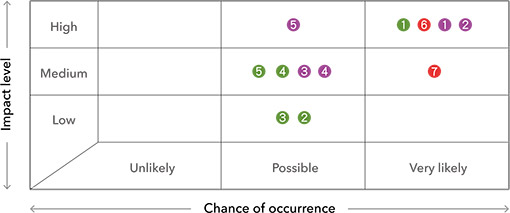
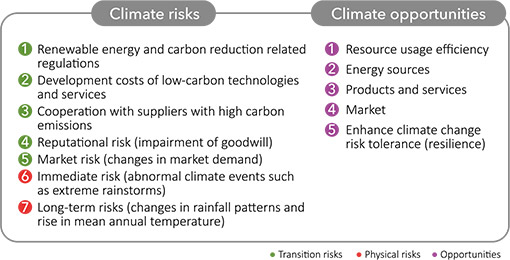
FEDS identified 7 climate risk issues and 5 climate opportunity issues through situational analysis, and ranked them based on the degree of impact and likelihood of occurrence for stakeholders. The impact was divided into 3 levels: low, medium, and high, and the likelihood of occurrence was divided into 3 levels: unlikely, possibly, and very likely to evaluate the impact and influence of risks and opportunities.

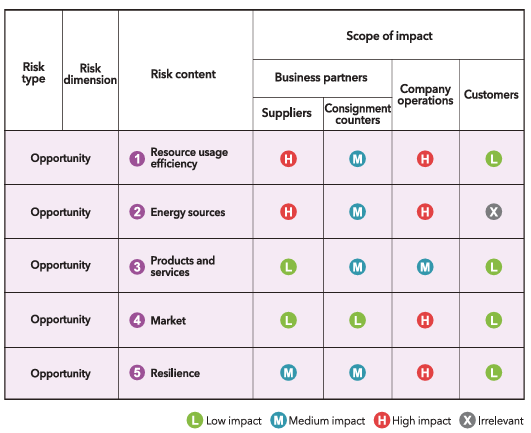
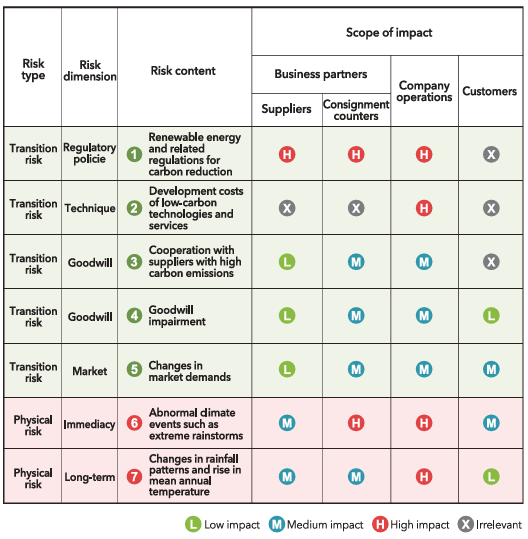
Impact List of Climate-Related Risks and Opportunities

Matrix of Climate-Related Risks and Opportunities

List of Climate-Related Risks and Opportunities

Based on comprehensive analysis results, FEDS selected 8 major climate risk and opportunity issues to strengthen the Company’s climate resilience. Appropriate management strategies and response measures are proposed as follows:

Transition Risk

Renewable Energy and Carbon Reduction Regulations

Risk Content

  • With the passage of the Climate Change Response Act and the promotion of the 2050 net-zero emissions policy, renewable energy use and carbon reduction performance will face stricter requirements.

Value Chain Impact

  • Suppliers, Counter Vendors, Company Operations

Potential Business and Financial Impacts

  • Rising renewable energy obligation ratios drive up the procurement cost of green energy certificates.
  • If a total carbon emissions cap policy is implemented in the future, carbon credits will need to be purchased, increasing operating costs.

Response Measures

  • Introduce smart energy-saving systems, gradually replace high-energy-consumption equipment, collaborate with counter vendors, and continuously assess expanding the proportion of renewable energy use.
Development Costs of Low-Carbon Technologies and Services

Risk Content

  • In response to the international net-zero trend, FEDS faces energy transition pressure. The adoption of low-carbon energy technologies and the procurement of related services will raise operating costs.

Value Chain Impact

  • Company Operations

Potential Business and Financial Impacts

  • Replacing high-energy-consumption equipment and procuring energy-saving devices increases expenditure.
  • Future trend of rising electricity prices may lead to higher operating expenses burdens.

Response Measures

  • Continuously optimize corporate electricity management, review the feasibility of reducing contracted capacity, and install solar power generation equipment to achieve carbon reduction targets.

Physical Risk

Extreme Rainfall and Other Climate Anomalies

Risk Content

  • Climate disasters cause operational interruptions, attendance difficulties, and logistics stagnation, or result in asset damage and personnel injury.

Value Chain Impact

  • Counter Vendors, Company Operations

Potential Business and Financial Impacts

  • Traffic disruptions preventing employee attendance and interrupting logistics supply lead to manpower shortages and inadequate product supply, reducing sales.
  • Hardware equipment failures cause a decline in customer traffic and increased repair costs, adding to sales losses.

Response Measures

  • Use climate disaster analysis and insurance to transfer risk, plan remote work and manpower support, establish a diversified supplier network, regularly inspect facilities, and implement disaster drills and personnel safety response mechanisms.
Changes in Precipitation Patterns and Increase in Annual Average Temperature

Risk Content

  • High temperatures reduce the willingness to shop outside and decrease customer traffic, while abnormal rainfall leads to water shortages.

Value Chain Impact

  • Company Operations

Potential Business and Financial Impacts

  • High temperatures increase air conditioning demand, raising electricity costs.
  • Consumers’ reduced willingness to shop affects foot traffic at physical channels, causing sales to decline.
  • Water shortage crises force the search for alternative water sources, increasing water costs.

Response Measures

  • Strengthen the thermal insulation of buildings and equipment rooms, and adjust air conditioning based on temperature and customer traffic.
  • Install water-saving equipment and formulate emergency contingency plans.

Opportunity

Resource Usage Efficiency

Opportunity Content

  • Improve resource usage efficiency through resource circulation and digitalization, optimizing overall environmental quality and reducing the carbon footprint.

Value Chain Impact

  • Suppliers, Company Operations

Potential Business and Financial Impacts

  • Implementing waste management lowers waste disposal costs, optimizes environment, enhances customer satisfaction, and drives growth in foot traffic.

Response Measures

  • Promote digital management to reduce paper use, set resource management indicators for paper, packaging materials, and waste recycling and track them monthly, and continuously optimize management mechanisms.
Sources of Energy

Opportunity Content

  • Through the adoption of energy-saving equipment, optimize energy efficiency; increase the proportion of renewable energy use to lower carbon emissions.

Value Chain Impact

  • Suppliers, Company Operations

Potential Business and Financial Impacts

  • Building renewable energy facilities, increasing the green energy use ratio, and adopting an energy management system optimize equipment, effectively reducing operating costs and achieving carbon reduction targets.

Response Measures

  • Complete green energy planning, continuously assess increasing the green energy use ratio, and adopt an automated energy management system to improve energy efficiency.
Market

Opportunity Content

  • Low-carbon operations build a sustainable brand image and expand capital market opportunities.

Value Chain Impact

  • Company Operations

Potential Business and Financial Impacts

  • Obtaining preferential interest rates reduces financing related costs.
  • Participating in initiatives enhances brand favorability.

Response Measures

  • Actively support climate action.
  • FEDS has negotiated preferential loan interest rates conditioned on ESG, and will, in line with its overall capital utilization plan, cooperate with financial institutions on ESG-related business in the future.
Resilience

Opportunity Content

  • Establish crisis management and early warning procedures to enhance the ability to respond to and manage climate risks.

Value Chain Impact

  • Company Operations

Potential Business and Financial Impacts

  • In response to the uncertainty brought by climate change, strengthening climate response capabilities enhances the trust of counter vendors and customers and reduces business losses.

Response Measures

  • Regularly maintain and service hardware and software equipment to ensure stable system operation and reduce the risk of operational interruption.

Climate-Related Risks and Financial Impacts

Risk and Opportunity Content

Taiwan’s government policies are moving towards achieving net-zero emissions, and carbon reduction outcomes will face higher standard requirements.

Value Chain Impact

Suppliers, Counter Vendors, Company Operations

Potential Business and Financial Impacts

  • Growing demand for green power purchases, and thus increased operating costs.
  • FEDS may face future carbon tax requirements.

Response Measures

Implementing smart energy-saving tools for more effective electricity conservation

Transition Risk • Development Costs of Low-Carbon Technologies and Services

Risk and Opportunity Content

Department stores primarily rely on electricity as their main energy source, and the development of low-carbon energy and services will inevitably impact company operations

Value Chain Impact

Company Operations

Potential Business and Financial Impacts

  • Growing demand for green power purchases, and thus increased operating costs.
  • FEDS may face future carbon tax requirements.

Response Measures

Implementing smart energy-saving tools for more effective electricity conservation

Physical Risk • Climate Anomalies

Risk and Opportunity Content

Climate disasters causing business interruptions, employee absenteeism, logistics disruptions, or damage to buildings and equipment

Value Chain Impact

Counter Vendors, Company Operations

Potential Business and Financial Impacts

  • Inability of staff and logistics to reach business locations will result in manpower shortages, inadequate product supply, and a decrease in revenue
  • Damage to buildings and equipment resulting in a decrease in customer traffic and an increase in repair costs

Response Measures

Transferring risks through insurance, simulating support for human resource planning, maintaining multiple suppliers, and implementing disaster prevention education

Physical Risk • Changes in Precipitation Patterns and Increase in Annual Average Temperature

Risk and Opportunity Content

High temperatures reduce the public’s willingness to spend outside the home, while changes in precipitation lead to water resource shortages

Value Chain Impact

Company Operations

Potential Business and Financial Impacts

  • The willingness of consumers to visit stores decreases, resulting in a decline in sales revenue
  • Water scarcity leads to an increase in water costs

Response Measures

Adjusting air conditioning capacity and operating hours based on temperature conditions, and establishing an emergency water contingency plan

Climate-Related Opportunities and Financial Impacts

Resource Usage Efficiency

Risk and Opportunity Content

Implement classification, enhance resource utilization efficiency, and attract consumers with sustainability awareness

Value Chain Impact

Suppliers, Company Operations

Potential Business and Financial Impacts

  • Effectively managing waste, enhancing overall environmental quality, and improving customer perception

Response Measures

Establishing resource recycling management indicators, and reducing operational impact on the environment

Sources of Energy

Risk and Opportunity Content

The implementation of energy-saving equipment effectively reduces energy consumption emissions

Value Chain Impact

Suppliers, Company Operations

Potential Business and Financial Impacts

  • Implementing energy-saving technologies for air conditioning to decrease operational energy consumption

Response Measures

Implementing automated management, and enhancing energy utilization efficiency

Market

Risk and Opportunity Content

Low-carbon operations have a positive brand image, leading to improved capital market opportunities

Value Chain Impact

Company Operations

Potential Business and Financial Impacts

  • Reduction of preferential interest rate finance to lower financing cost

Response Measures

Engagement with financial institutions regarding related business: green revolving funds, green deposits

Resilience

Risk and Opportunity Content

Establish crisis management and early warning measures for climate disasters to enhance climate risk management capabilities

Value Chain Impact

Company Operations

Potential Business and Financial Impacts

  • Enhanced resilience to climate disasters, increased trust of specialized manufacturers and customers, and reduced business losses

Response Measures

Ensuring regular maintenance and inspection of all hardware and software equipment to guarantee operational continuity

Indicators and Goals

To achieve net-zero emissions by 2050, FEDS focuses on four key actions: energy efficiency, carbon reduction, renewable energy, and waste reduction. By prioritizing energy and carbon reduction through energy management and renewable energy procurement, FEDS aims to reduce emissions year by year, with a 30% reduction target by 2030 and net-zero emissions by 2050.

2030

Carbon Reduction Goal

  • 30% reduction in carbon emissions

Development Goal

  • Continue to obtain the Green Building Label
  • Install solar panels
2050

Carbon Reduction Goal

  • net-zero emissions

Climate Change Response Action Measures and Management Indicators

Energy Saving

Action Measures

  • Adopt the iAuto Smart Control Platform
  • Replace high-energy-consumption chiller units
  • Optimize operating schedules of air conditioning, lighting, and elevator/escalator

Carbon Reduction

Action Measures

  • Conduct an annual GHG inventory and third-party verification
  • Control GHG emissions density

Green Energy

Action Measures

  • Install solar photovoltaic systems (installed capacity of 913 kW)
  • Increase the proportion of renewable energy procurement

Waste Reduction

Action Measures

  • Increase resource recycling volume
  • Promote the “pay-by-actual-weight” system

Management Indicators

  • Electricity consumption (kWh) and annual reduction
  • Energy use intensity (kWh/revenue)
  • Electricity consumption per unit area (EUI)

Management Indicators

  • GHG emissions
  • Emissions intensity (tCO₂e/revenue)

Management Indicators

  • Renewable energy use ratio (%)
  • Green energy generation (kWh)
  • Annual carbon reduction (tCO₂e)

Management Indicators

  • Total waste (metric tons)
  • Recycling rate (%)
  • General industrial waste reduction rate (%)